

 Dental Billing
 13-May-2026
The way dental practices manage billing is undergoing a fundamental shift. In 2026, rising insurance complexity, staffing shortages, and growing patient expectations are pushing the limits of traditional billing workflows. Manual processes that were once considered standard are now a direct source of revenue loss, compliance risk, and administrative burnout.
For dental practices of every size, dental revenue cycle management has moved from a back-office function to a front-line business priority. From eligibility verification and claim submission to denial tracking and collections, every step in the billing cycle carries real financial weight. The practices that get it right are collecting more, spending less time on rework, and delivering a better patient experience. The ones that fall behind are watching revenue walk out the door.
This blog breaks down what is driving the dental billing revolution in 2026, how AI is cutting claim denials by up to 50%, and why smart practices are choosing modern dental billing solutions and expert support to stay competitive.
Several converging forces are pushing dental practices to rethink how they handle billing from the ground up.
First, payer rules have never been more complicated. Practices in 2026 are navigating a growing maze of PPO plan variations, frequency limitations, coordination-of-benefits (COB) disputes, and automatic claim downgrades. Each payer operates under its own rules, which change regularly. Keeping up manually is not realistic.
Second, staffing remains a persistent challenge. Front desk and billing staff turnover is high, and finding experienced dental billers who understand CDT coding, insurance appeals, and payer-specific documentation requirements is increasingly difficult. Every billing gap left by an undertrained or overburdened employee results in lost revenue.
Third, the financial stakes are higher than ever. Industry data shows that the average dental practice loses between 5% and 10% of collectible revenue to claim denials, coding errors, and slow follow-up. Automated billing systems and electronic workflows are reducing that number significantly for practices that make the shift.
Dental providers alone could save nearly $1.5 billion annually through electronic billing and payment systems, according to the 2024 CAQH Index.
These pressures together have created the conditions for a genuine revolution in dental billing, one where technology, expertise, and smarter processes are replacing reactive, error-prone manual workflows.
Claim denials are one of the most costly and preventable problems in dental billing. The most common denial reasons have not changed much over the years: missing documentation, incorrect CDT or ICD coding, lack of medical necessity, eligibility errors, and coordination-of-benefits issues. What has changed dramatically is AI-powered systems' ability to catch these problems before a claim is submitted.
AI in dental billing works by scanning claim data in real time, comparing it against payer-specific rules, patient records, and historical billing patterns to flag errors and inconsistencies before submission. The result is a much higher clean claim rate and significantly fewer denials to chase after the fact.
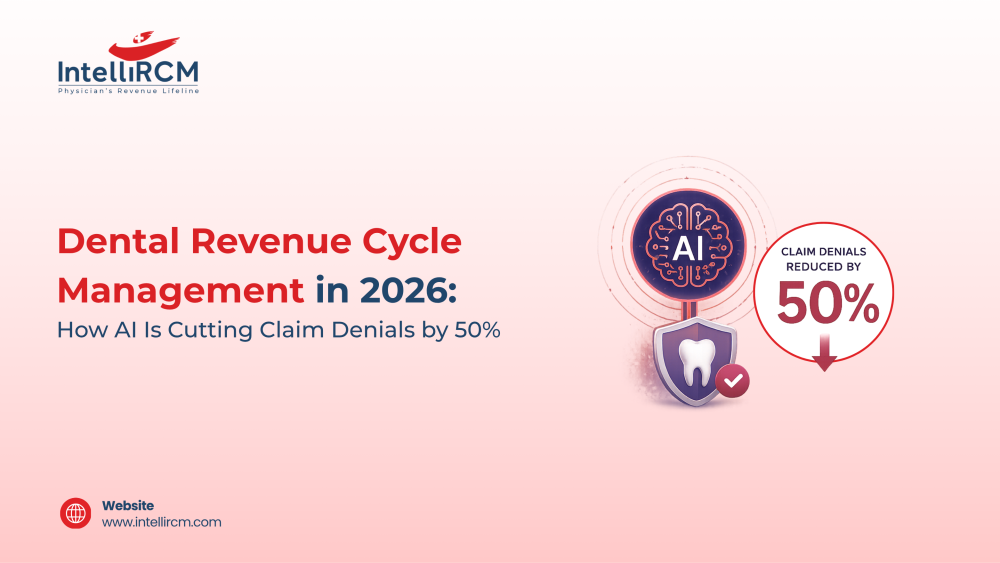
The numbers tell a compelling story. Practices using manual billing processes experience claim denial rates of 15–20%, while those using automated billing systems report denial rates as low as 3–7%. That is a reduction of up to 50% in avoidable denials, which translates to faster reimbursements, lower administrative costs, and stronger monthly collections.
Beyond pre-submission scrubbing, AI also transforms the post-denial workflow. Instead of manually reviewing each rejected claim, AI systems flag denied claims by root cause, prioritize follow-up by dollar value, and automate the resubmission process where appropriate. Practices that once spent weeks chasing denials are now resolving them in days.
AI also learns over time. As it processes more claims, it identifies patterns specific to certain payers, procedure codes, or documentation gaps and adjusts its recommendations accordingly. This continuous improvement means the longer AI is in use, the more effectively it protects practice revenue.
Effective dental revenue cycle management covers every financial touchpoint in a patient's visit, from pre-appointment eligibility verification to final payment collection. AI and automation are transforming each of these stages in meaningful ways.
Automated systems verify patient insurance benefits in real time before appointments, eliminating the manual phone calls and portal checks that once consumed hours of front desk time. Verification errors, one of the top drivers of preventable denials, are caught before they reach the claim stage.
AI-assisted claim creation matches procedures to the correct CDT codes, auto-generates narratives for complex cases, and submits claims electronically through integrated clearinghouses. Clean claim rates improve consistently.
AI systems track every claim from submission through adjudication, flag denials with root-cause analysis, and trigger automated follow-up workflows at 15, 30, and 45-day intervals. Nothing slips through the cracks.
Automated ERA and EOB processing eliminates manual payment entry, detects underpayments against contracted rates, and updates patient accounts in real time.
AI-powered patient billing tools send personalized statements, automated payment reminders, and digital payment links, improving collections without burdening staff.
The cumulative impact is a faster, more accurate billing cycle that is substantially less dependent on manual oversight. Practices that have integrated AI into their revenue cycle management services report saving 20 or more administrative hours per week, with measurable improvement in both net collection rates and days in accounts receivable.
With so much focus on automation, it is fair to ask whether human expertise still matters in dental billing. The answer is an unambiguous yes, and for good reason.
AI excels at rule-based tasks: verifying eligibility, scrubbing claims, flagging patterns, and processing payments at scale. But dental billing regularly encounters situations that require judgment, payer knowledge, and experience that no algorithm has fully mastered. Predetermination requirements, payer-specific documentation preferences, complex COB scenarios, appeal language that actually gets results, and the nuanced communication required to resolve aged accounts all depend on a skilled dental billing specialist who understands how dental insurance actually works in practice.
AI catches the rule-based errors that human review might miss during busy periods. But automation works best when paired with experienced billers who can handle the exceptions, appeals, and complex cases that require real judgment.
The most effective dental billing operations in 2026 are not choosing between AI and human expertise. They are combining both. A certified dental billing specialist using AI-powered tools is exponentially more productive and accurate than working alone. The AI handles the volume and repetition. The specialist handles the complexity and advocacy.
For dental practices, this means investing in skilled billing professionals and modern technology simultaneously is the strategy that delivers the strongest, most consistent revenue results.
Not all dental billing solutions are designed equally, and choosing the wrong platform or service can cost a practice as much as the billing problems it was meant to solve. Here is what to evaluate when assessing your options.
It is also worth considering the difference between software-only solutions and full-service dental billing solutions that combine technology with dedicated billing professionals. For many practices, the latter delivers superior results because it removes the internal management burden entirely.
A strong connection between billing software, credentialing support, and administrative workflows, including tools like CAQH attestation management, ensures your practice stays current with payer requirements and enrollment deadlines that directly affect your ability to collect.
IntelliRCM combines certified dental billing specialists with AI-powered claim scrubbing to reduce denials, speed up reimbursements, and strengthen your monthly collections. Smarter dental billing starts with one conversation.
The decision to outsource dental billing has become one of the most strategically sound moves a dental practice can make in 2026. Here is why practices of all sizes are making the shift.
For dental service organizations (DSOs) managing multiple locations, the case for outsourcing is even stronger. Centralized, scalable medical billing solutions built specifically for dental groups can standardize revenue cycle performance across every location, giving leadership real-time insight and consistent collections without building a large internal billing department.
IntelliRCM is purpose-built for dental practices that are serious about revenue performance. Combining advanced AI automation with certified dental billing specialists, IntelliRCM delivers end-to-end dental revenue cycle management services that reduce denials, accelerate payments, and free your team to focus on patients.
Whether you are a single-provider practice struggling with inconsistent collections or a growing DSO looking to standardize billing across multiple locations, IntelliRCM has the people, technology, and processes to deliver measurable results.
With IntelliRCM, you do not just get a billing service. You get a revenue partner that treats your collections with the same urgency you would. Ready to see what smarter billing looks like? Connect with IntelliRCM today for a free revenue cycle audit.

Maximize your healthcare financial health by adopting AI-driven RCM billing services. Learn why smart automation is now vital for modern revenue recovery today.
Read Full GuideThe dental billing landscape in 2026 is more complex, more competitive, and more opportunity-rich than ever. AI-driven automation is delivering real, measurable results, cutting claim denials by up to 50%, reducing administrative burden, and accelerating the entire revenue cycle. But technology alone is not the complete answer.
The practices that are winning combine smart dental billing solutions with certified dental billing specialists who bring judgment, experience, and payer knowledge that algorithms cannot replicate. They are investing in robust dental revenue cycle management systems that cover every stage of the billing lifecycle, and many of them are choosing to outsource dental billing entirely to eliminate the overhead and variability of managing it in-house.
Whether you are looking to modernize your current billing process, reduce your denial rate, or hand your billing over to specialists who make it their full-time focus, the path forward starts with the right strategy and the right partner.
Your revenue cycle is the financial backbone of your practice. In 2026, it deserves the same level of investment and attention as the clinical care you deliver every day.
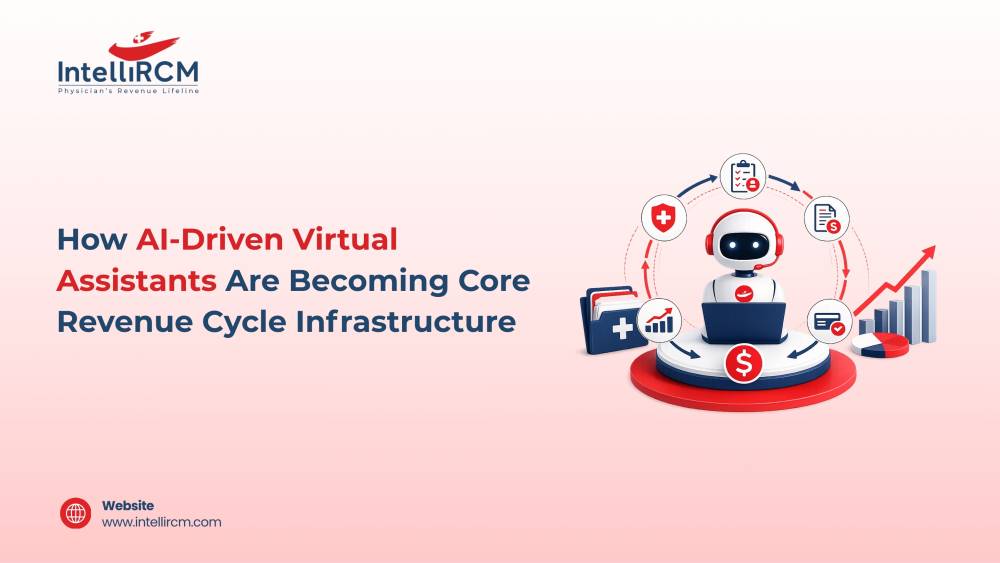
AI-driven virtual assistants are redefining healthcare revenue cycle management. Reduce claim denials, speed up reimbursements, and cut costs. Optimize your RCM today.
Read More
See the top 2026 revenue cycle management trends in AI, cybersecurity, and nearshore outsourcingSchedule a consultation to modernize your RCM billing today.
Read More
Virtual assistant technology has the potential to revolutionize patient engagement in healthcare, improving access to care, enhancing patient satisfaction, and ultimately driving better health outcomes. By embracing these innovative technologies and addressing the associated challenges, healthcare providers can unlock the full potential of virtual assistants to transform the patient experience and improve the quality of care.
Read More